
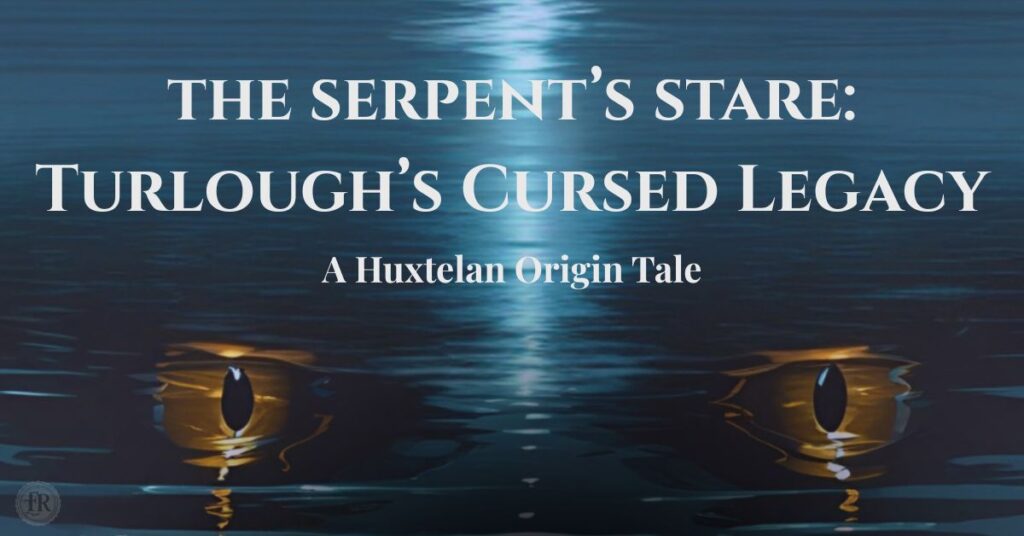
A Huxtelan Origin Story
An Ambitious Scribe
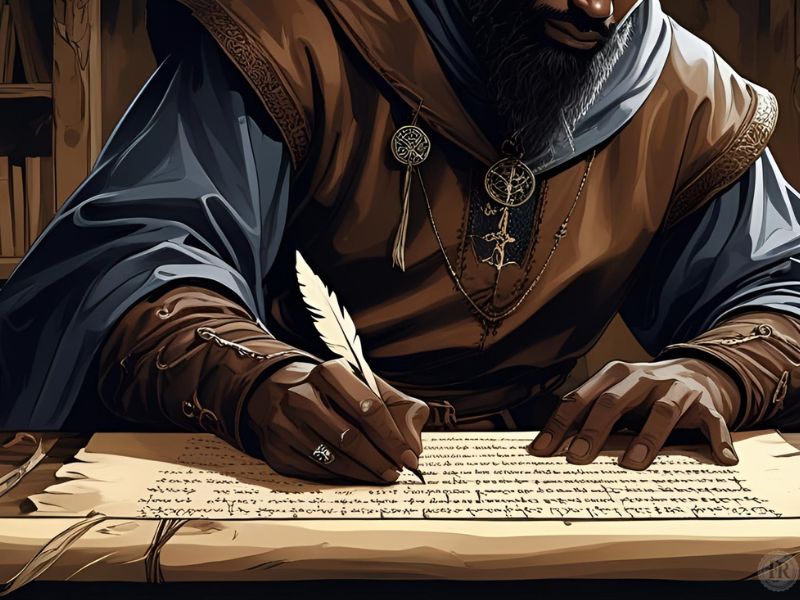
There once lived a scribe named Turlough, born in the small Huxtelan town of Kaillun. From the age of eight, he was trained in the royal script and calligraphy of kings by the Healers inside The Citadel. Turlough despised being a scribe. He did not want a life surrounded by parchments and scrolls; the life of monotonous recording of royal decrees and military conquests for the history books of Iosia. He desired a life beyond that of a scribe. He longed to wear the robes of the Huxtelan Healers, men chosen by the gods, and revered throughout the kingdom for their wisdom, prophetic insight, healing abilities, and unwavering loyalty to the crown. The Healers were the only constant—the only honored people—existing in the chaotic, war-torn lands of Iosia.
Turlough’s desire to attain the title of Healer did not come from a heart dedicated to service or sacrifice, but one filled with envy and greed. He craved the reverence and power that such a position would provide to him. And those flaws are exactly what Master Anrai, the wise head of The Citadel, saw when he peered into Turlough’s amber eyes and sifted through the scribe’s soul.
“You say you seek the robes of a Healer, Turlough, but your soul wears the cloak of arrogance. Your heart is as dark as your eyes, young scribe, corrupted by greedy ambition. A Healer must possess a heart dedicated to placing the needs of others above oneself, and even sacrificing one’s life, if necessary, for King and country.”
“You’re wrong. I can do it, Master Anrai.”
“No.” The elderly leader held up a wrinkled hand and shook his head. “You will never be a Healer. The gods and the Thorne King have destined you for a life as a scribe. Be thankful that you have been so blessed, as that which the gods give, they can also take away, Turlough.”
A Cloak of Bitterness & Magic
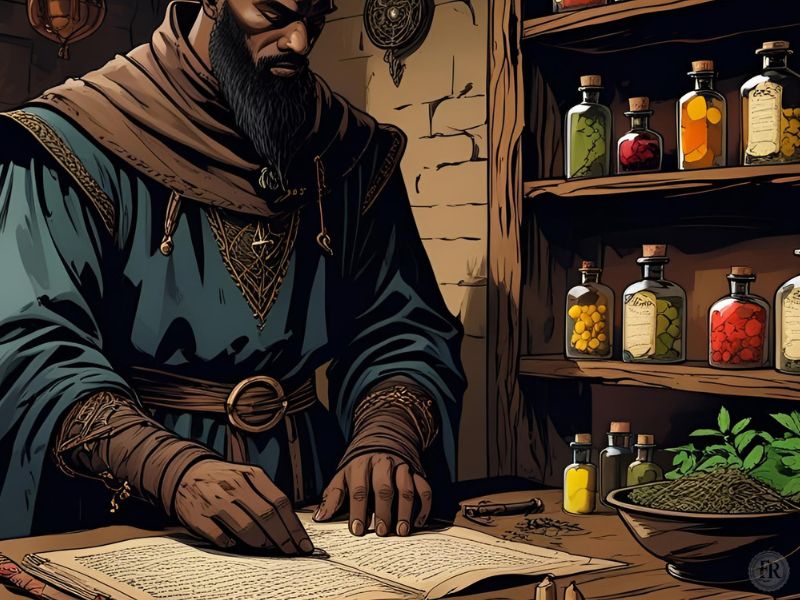
With all hope of attaining his heart’s desire gone, Turlough vowed revenge. He descended into the shadows of despair, spending his nights in the forgotten cellars beneath The Citadel, poring over the ancient scrolls, where scraps of ancient magic slumbered. Greedy for glory, he taught himself the most forbidden of these magics—Onyx magic—a magic vilified and feared for the dark, unmerciful brutality of its spells.
As Turlough’s knowledge and skill of Onyx magic grew, so did his rage. He carved the lost sigils into his flesh, careful to ensure that the sleeves of his tunic and robe covered the markings from view.
On the final day of the Frost Moon, Master Anrai discovered Turlough’s dark, dangerous secret and cast him out of The Citadel and Huxtela. A royal decree and bounty followed. With a price on his head, Turlough fled from the civilized regions of Iosia to the deserted northern region of Valdisia. He wandered through Valdisia’s wildlands, cloaked in his faded robe, with only bitterness and dark spells as companions.
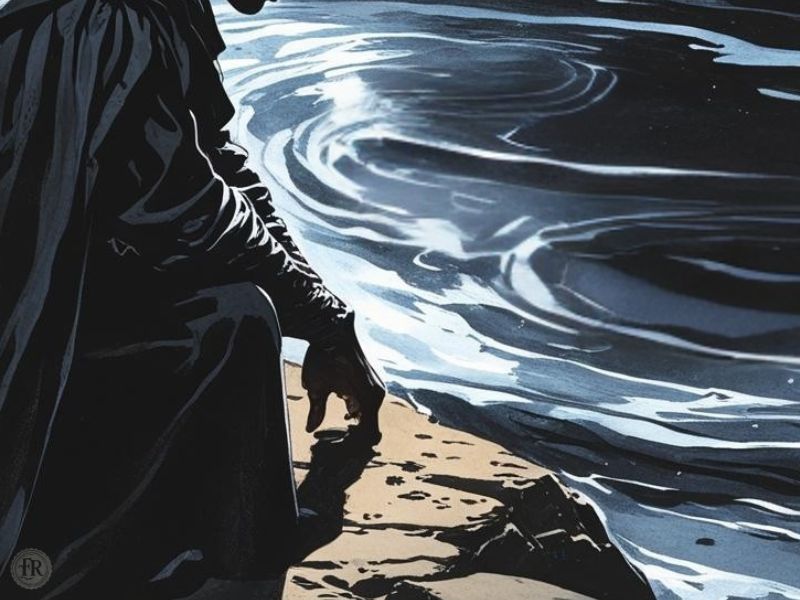
Years passed. Turlough’s heart twisted by Onyx magic darkened and hardened, like the scales of a serpent etched in stone. Despite his dire surroundings, he still craved admiration, always searching for the spell or magic rune that could turn back the sands of time and give him another opportunity to pursue a life as a Healer or unleash revenge on Master Anrai, of which Turlough was uncertain.
A Pierced Soul
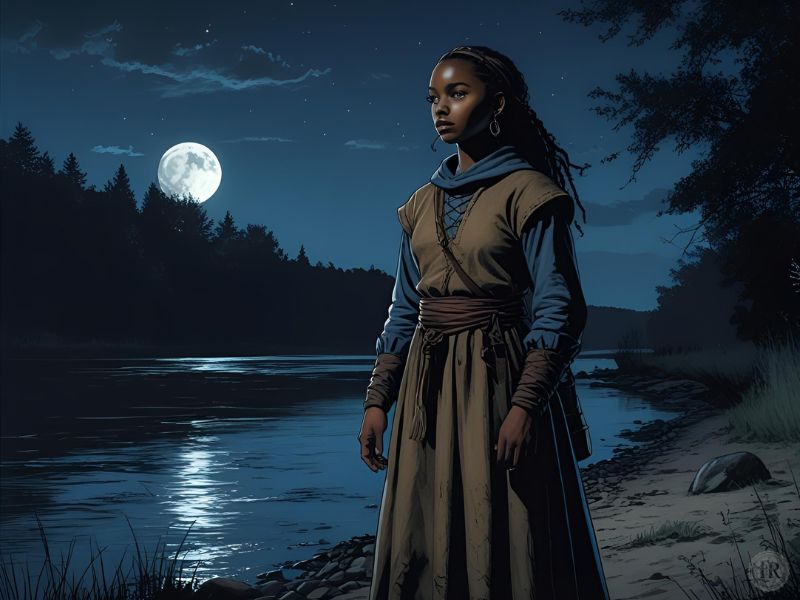
One night, under the full and ghostly Harvest Moon, Turlough crossed paths with a woman beside a stream—a beautiful young traveler with kindness in her eyes. As he watched her from the shadows, her presence pierced the hollow in his soul. And, for the first time in his life, Turlough longed for something other than the title of Healer.
“Hello there,” he said, creeping out of the bushes.
She gasped and stumbled backward, her right hand dropping to grasp the small dagger tied to her waist. “Stay back,” she warned, her fingers curling around the dagger’s handle.
“I won’t hurt you. My name is Turlough.” He took another step forward. “What is your name?”
“I’m warning you, beast… stay back!”
Turlough raised his palms in surrender. “I promise, I am no beast. I am a meager scribe.”
“No. Get away,” she screamed. The woman turned and ran, disappearing into the darkness.
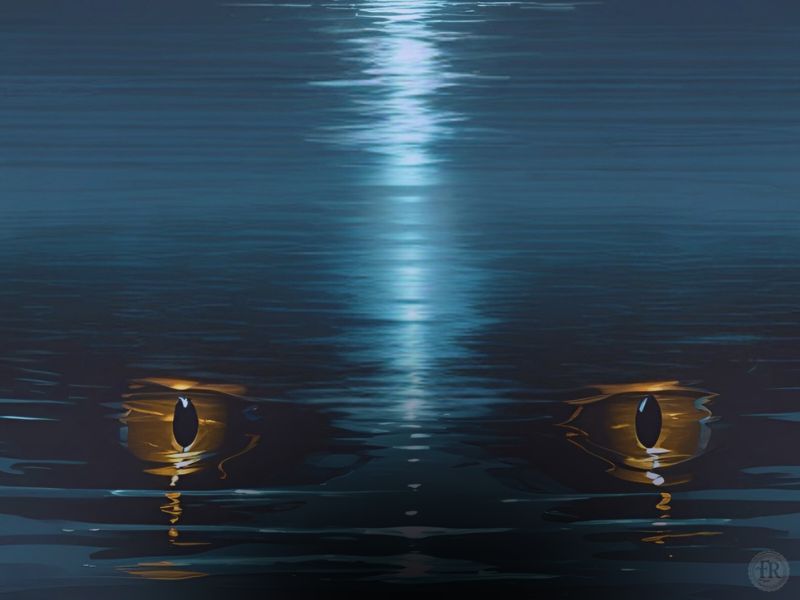
Confused, Turlough dropped to his knees beside the river and peered into the moonlit water to glimpse the man he knew himself to be.
“I’m no beast,” he muttered and leaned over his reflection on the gentle ripples. “Noooo,” he moaned, his mind unprepared for the truth that the water unveiled.
His once taut brown skin had grayed and cracked into scales. His amber eyes now gleamed gold—slitted and soulless. No longer a man, yet not yet a beast. He was a creature of his own making: his reflection, the stare of a monster poisoned by a greedy heart and blackened by Onyx magic.
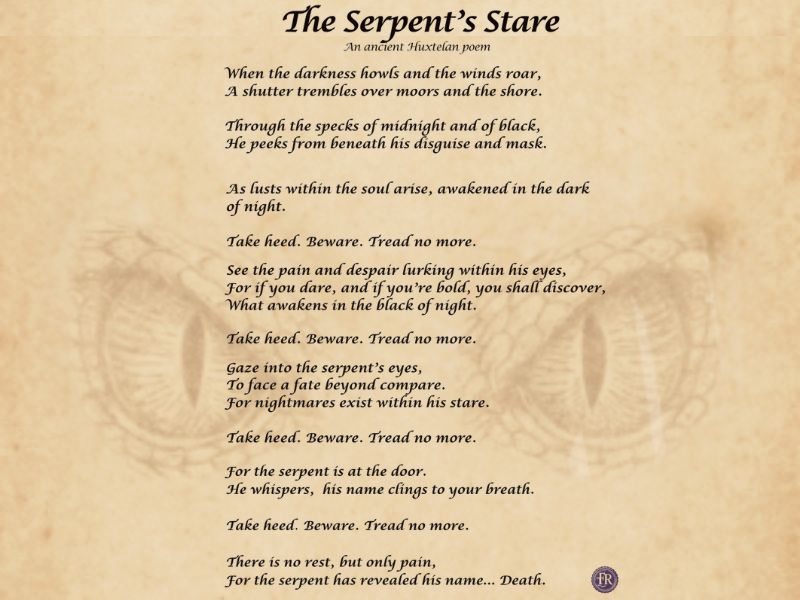
That night, he sat beside the water’s edge, and by lantern with trembling hands, Turlough removed the last sheet of parchment from his worn satchel and scribed his final thing—a poem—a strange, sorrowful elegy written in the Huxtelan meter he had studied as a boy. The words it is said were gifted to Turlough by the stars themselves, taking pity on the scribe. Others believe the words were from the gods, a final warning. And others proclaim that the lines in the poem came directly from Turlough’s withered, repentant heart as a confession.
A New Dawn
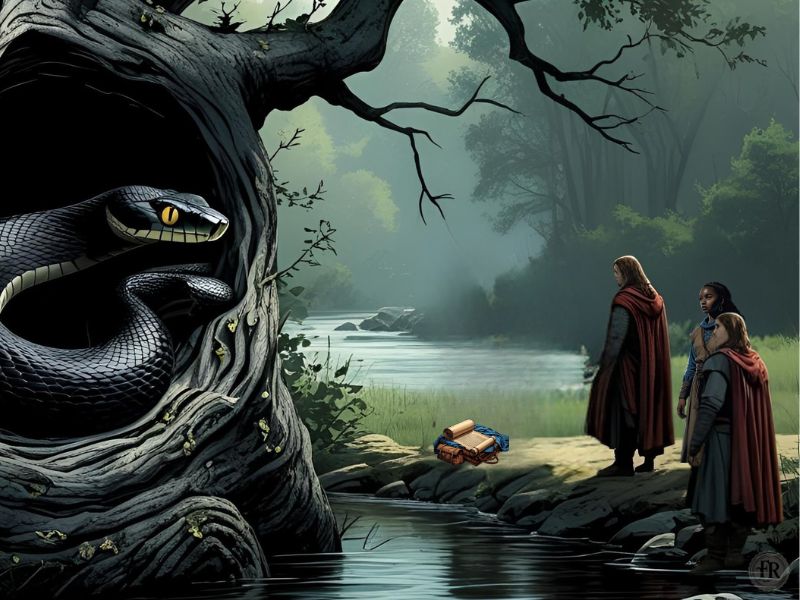
The next morning, when the sun rose over the cursed glade, the young woman returned with several men from the local village. The men were armed with hatchets and pitchforks, ready to confront the beast, but Turlough was no longer there. His tattered robe, satchel, and a rolled-up scroll sat in a heap on the ground.
“He was right here,” the woman said.
“Look, what’s that?” a man called out, pointing to a pile on the riverbank.
Another man walked over and kicked the robe with his boot. “Damn fool must’ve wandered into the river and drowned.”
“Lucky for him,” chuckled another man.
The young female traveler bent down and picked up the scroll. “What is this?” she said, her nimble fingers carefully unrolling the parchment, revealing the poem. “The Serpent’s Stare,” she murmured.
Not far from the group, coiled in the roots of an ancient tree, was a scaly black serpent, its mournful golden eyes fixed on the woman. Turlough would never be adored, nor revered. As he watched the group retreat from the clearing, taking his words and possessions with them, he knew that the remainder of his life would be one of screams and fear and death, for that is all that the serpent with the cursed soul deserves.
The End… for now
A Note from the Realm Keeper
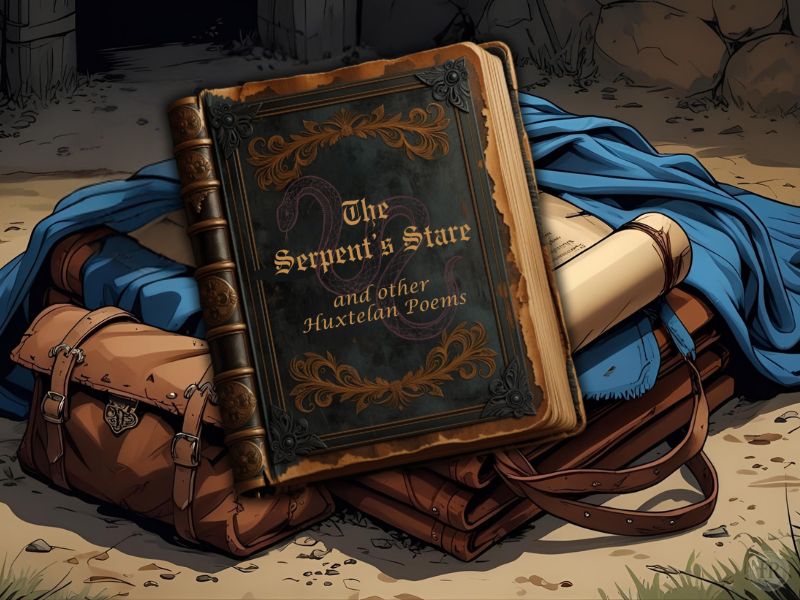
Below is the original version of The Serpent’s Stare poem that Turlough inked on that somber night beside the river. This poem was later compiled into a book with other Huxtelan poems and has been recited to children in nurseries throughout Iosia for generations. The Serpent’s Stare is the most well-known of the poems, and to this very day, it still serves as a reminder of what greed and misguided desires can lead to—Death.
A Note from Zelinda
Some legends whisper loudest in silence—warnings not carried on paper, but in the glint of the serpent’s stare or the regrets uttered in an ancient verse. The tale of Turlough is not merely a story about punishment and greed, but a mirror, daring us to peer into it, view our own reflection, and ask: When you gaze into your desires, what stares back?
